Second week back and we have really gotten back into the swing of things in Dual Credit English, a week filled with lots of reading and the lyrical genius that is Lin Manuel Miranda (which I am definitely not complaining about). By putting both the textbook example and definitions of the three big forms of rhetoric and a musical filled with all sorts of rhetoric together, I think I am developing a strong grasp on what rhetoric is and how to apply it to daily life. The textbooks wording and examples led me to understand the different subcategories of each form of rhetoric, which is incredibly helpful not only in class, but within most real life situations as well. And then applying these new concepts to the musical itself really helped me solidify my understanding of rhetoric.

I had actually got myself into a bit of trouble with my father this week. To make a very long and complicated situation short, my phone is heavily monitored. My every location is watched, every text, every call and so on and so forth. So my parents don’t trust me at all, and never have, which is why I often get in trouble for things related to my phone even if they aren’t really justified. Essentially, the reason I was in trouble on that particular day was that the app had located me at a friends house during school at around 11:30 and my father wanted to know why. My goal of the conversation was to convince him that I did not go over there, which was the truth, but the app had more credibility to him than I did. I had to fight the apps ethos.
I actually remembered what I had read in the textbook early that day, about how having a strong logos argument can build up ethos to an extent. So, I used logic to my advantage, stating that there would be record of me leaving the school, several people would have stopped me before I even got out of the building, my friend in question cannot drive, most of my friends cant drive on that note, I know I have a tracker on my phone so why would I leave campus with it when I knew you would find out, etc etc. By building up all the logical reasons why I could not have left the school to go over there, I slowly built up my own ethos, as all my logical assumptions made sense. I also used the ethos of the teachers in my argument, as I was willing to ask them to email my father to confirm my whereabouts. In the end, my logos and ethos filled argument was successful against the apps ethos, and I got off with a stern lecture and not a full on assault of my character, which was a win in my book.
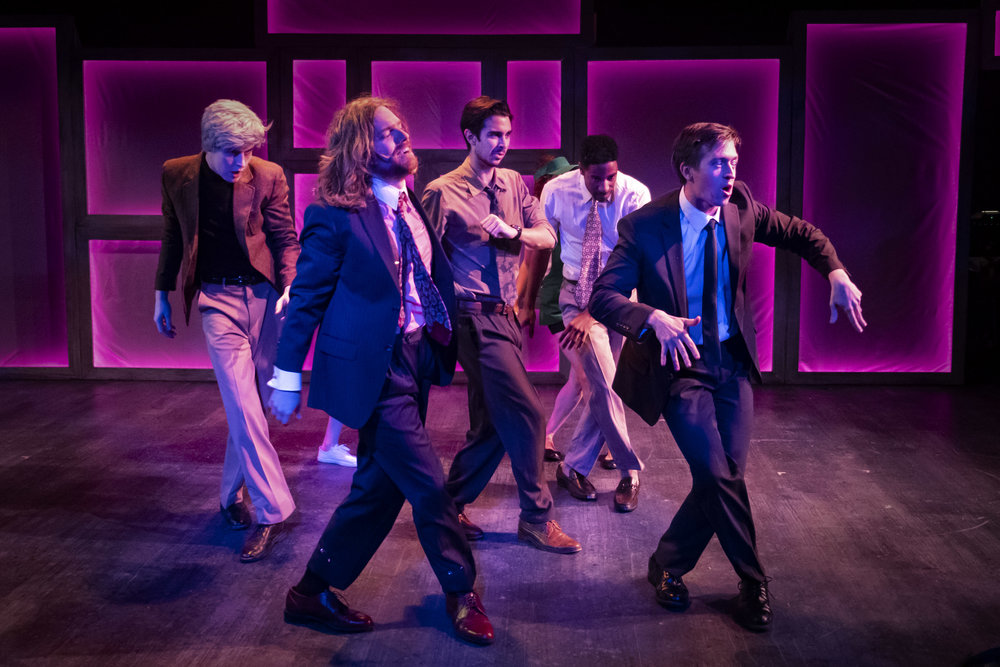
For my rhetorical analysis this week, I am once again using a musical, as I all I do is really listen to musicals and the one in particular is filled with tons of rhetoric. The musical depicted above is called ¨The Guy Who Didn’t Like Musicals¨ performed by Starkid Productions.
This musical is about a small town that is hit by a meteor, causing a zombie apocalypse of sorts due to alien possession. Expect, instead of turning into zombies, the victims of these possessions start to sing and dance as if they were in a musical. These monsters then use their host bodys memories to convince and manipulate the living to become one of them. Due to this, there is a ton of rhetoric. Nearly all the songs featuring a possessed monster includes them trying to spread their influence include some sort of rhetoric used. The song I’m using is the finale of the entire show, when the main character that was thought to have died comes back and is revealed to be a monster himself.
Throughout the song, he is trying to convince to the female lead to join him and the other monsters on stage. He does this by referring all the other songs in the play, but by doing this, he briefly uses all the rhetoric used in the entire musical. Paul says in the beginning of the number, ¨I’m still the man you trust¨ attempting to play off the ethos he has built with Emma throughout the entire musical. He then goes on to say ¨don’t you want to see me happy, is that so tragically wrong¨, now using slight logos but heavily leaning on the pathos argument, as him being happy is not bad thing, and if she thought this then she is the one in the wrong. Throughout the rest of the number, Paul constantly uses his strong romantic relationship with Emma against her. He mentions that this one of the happiest he has ever been, that he ¨found his calling, and you can too¨. By saying this, Paul is trying to sell the fact that this is a wonderful thing, and that if she joined him, she could have this happiness as well. The majority of the rhetoric used is pathos and ethos, and this play shows how moving these arguments can be.
Steves, Ashley. “Now Casting: Hit Broadway Musical ‘Hamilton’ Needs Talent 3 More Gigs.” Backstage, Backstage, 29 Aug. 2019, http://www.backstage.com/magazine/article/now-casting-broadway-musical-hamilton-68894/.
“Team Starkid (Ft. Corey Dorris, Jaime Lyn Beatty, Jeff Blim, Joey Richter, Jon Matteson, Lauren Lopez, Mariah Rose Faith & Robert Manion) – Inevitable.” Genius, 24 Dec. 2018, genius.com/Team-starkid-inevitable-lyrics.
 Liz Doolin, Lab Blog for English