Featured

Blog #1, What do I want to learn this term?

After being gone for quite some time, Dual Credit English 1302 is back. Although we did not have a full week full of class, there was still quite a bit to do. Two quizzes and a new assignment, a strong way indeed to start classes for the new year. A quick brush over the old stuff, what the schedule for the rest of the year looks like, and a new and interesting way to take lab credits made for an information loaded class period, which was directly followed by not only one but two quizzes, one of which I promptly bombed… The next class period was learning about cover letters and resumes, which at first glance sounded boring as I thought I knew all I possibly could about the topic. I was, in fact, wrong. I was under the impression that someone would read my nicely formatted resume with all the fancy wording and paragraphs and it would make a huge difference in the hiring process. I now know that is not true and they are mostly filtered through machines, and that buzz words written in white hidden in the margins might not be such a bad idea, so thank you for the tip. I also did not know cover letters were used outside of business proposals nor how to write one for myself without sounding arrogant for that matter.

With the new schedule and new term laid out in front of me, the love of English I have had since I was young started to burn inside me. What could I learn this semester? What did I want to learn this semester? That was the question, and it took me some time to think of an answer. I have come up with this: I truly want to learn more about rhetoric in the context of a fictional work, how you can use these ideas in ways that don’t necessarily try to sell you something like a product, and how you can use rhetoric in day to day life, as I am horrible in arguments and it would be nice to win one now and then.

Rhetoric in real life is easier to spot than I had thought it would be. Around two hours after we were tasked with finding rhetoric in real life, my darling boyfriend turned out to be the one who showed me how easy it was to spot rhetoric if you knew where to look. We were in the halls and he was trying to convince me to not stress over my art project, which was going to be turned in to a major competition that I need to receive two medals in to get my letterman jacket. I was stressed and trying to force myself to make a new piece and he was attempting to convince me to not do another piece so I wouldn’t stress over this. I was using ethos in my argument against him. Ethos because I have been to this competition before therefore I know what gets medals, what goes to state and what doesn’t get anything at all. I have more credibility to discuss this matter over him, who has never been to any art competition at all. He was using logos in his counterargument, using logic to denounce my points, stating that adding stress and rushing the piece would lower the quality of work. He ended up being right, as his logic skills are a lot stronger than my experience alone. If I wanted to convince him that I was correct in the future, I should use other forms of rhetoric alongside my pathos.

The rhetoric I am going to analyze for this blog comes from a moment from the Six musical, a musical where all the wives of King Henry the 8th compete to determine which queen had the hardest life alongside Henry. Each queen has a song used as their evidence to prove they had the hardest life, and nearly every queen uses pathos by showing the terrible situations they all experienced as Queen. [Catherine of Aragon was cheated on and forced out of the crown, becoming the first queen to be divorced from the King, Anne Boleyn was cheated on and beheaded, Jane Seymour died shortly after giving birth to her son, Anne of Cleves was divorced because of her looks, Katherine Howard was beheaded for not being a virgin when she married the King after a series of sexual abuses upon her, and Catherine Parr had to give up her true love to marry the King].

However, one moment during the musical, Katherine Howard has a small speech before going into her song. Before this speech, the other queens had been implying that she could not compete with them. Katherine Howard then goes through and proves her wrong through various forms of rhetoric. To Catherine of Aragon, she states ¨And almost moving into a nunnery, that almost could have been really hard for you¨, showing her use of logos. She uses logic here to convince the audience and the other queens that Catherine of Aragon didn’t move to a nunnery, meaning she has little to no right to compare her almost going through something horrible to Katherine Howard’s life, filled with horrible things that did happen to her such as her beheading. To Boleyn, she uses ethos. She states to Boleyn that ¨Surely you must win the contest then Anne, as you were beheaded!¨She then counts on her fingers up to herself in the list of wives, as she was too beheaded. This is pathos because Howard is just as credible to talk about her life being awful because was beheaded as Boleyn is. Throughout the musical, Howard is the only queen who doesn’t only use pathos to support her argument that her life was, in fact, the hardest.

Works Cited

Clement, Olivia. “Broadway’s Six Finds Its Stars.” Playbill, PLAYBILL INC., 10 Sept. 2019, http://www.playbill.com/article/broadways-six-finds-its-stars.

Marlow, Toby and Lucy Moss. ¨Six the Musical.¨ Six the Musical, http://www.sixthemusical.com
Blog #10, How is Rhetoric in a Proposal Different or Similar to that in a Paper

Ah, well, here we are again, another blog for Dual Credit English and discussing the effectiveness and importance of rhetoric in everyday life. The transition from in-person classes to online ones has been difficult, as you lose a lot of the little things that you might take for granted in school life, never thought I’d miss those cramped hallways filled with the talk of over a hundred students like I do now.

This week, I started to become increasingly aware of how a paper and proposal are similar, as I had been operating under the thought that they were very different. They are, at the core of both of these written works, trying to convince you of something by defending a claim with evidence. Both must contain all the various forms of rhetoric to be considered successful in the final production, although papers tend to focus more on logos. I just think it is interesting to see how both use different forms of rhetoric to eventually get to the same end goal.

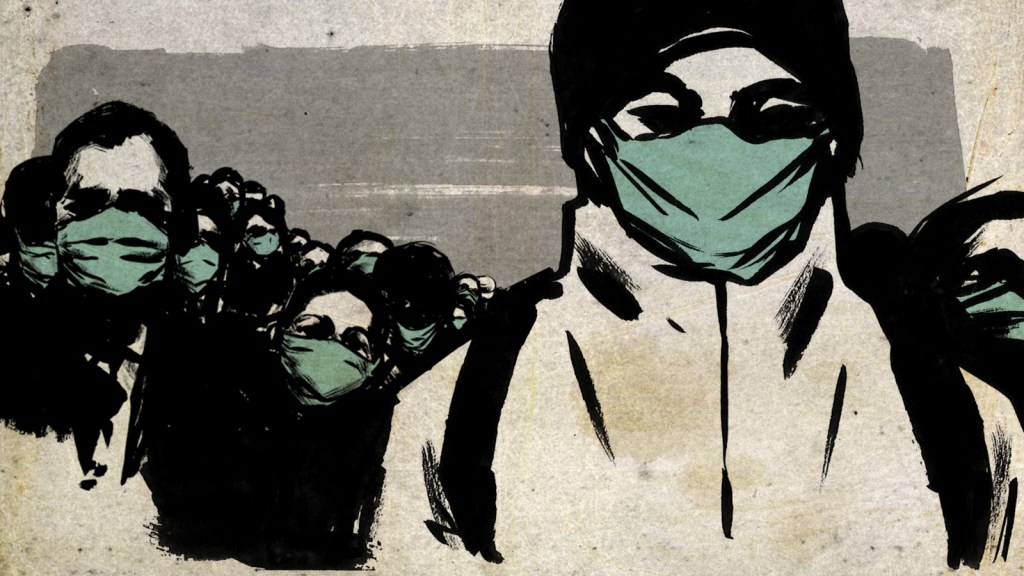
This week, and all the weeks since we left school to be completely honest, have been difficult for me as I can’t seem to do much of anything, the quarantine has really made it hard for me. But, after a few things started going better for me and I could see tons of rhetoric all around. One example specifically that stood out to me was the rhetoric used by people who are leaving their homes during quarantine. This group of people predominantly use logos and pathos but not effectively as their claims are unsupported.

They attempt to use logic, by stating that if they go out to restaurants or something of a similar nature it will help boost the declining economy because they are spending their money or that by going outside, sick or not, they are boosting up their own immune system at the same time as boosting everyone else around them so that the virus won’t be able to spread much further. While at basic level logic, yes, they are technically boosting the economy and, yes, to some extent they are helping to boost their own immune system. But if one thinks a bit deeper into this, you can see that they are doing the reverse. By leaving your house, you could potentially spread COVID-19, which will lead to more cases, a longer quarantaine, and more businesses shutting down. These shut downs will lead to a prolonged economic decline, and so, no, leaving the house is not helping the economy long-term, though it may help pay the workers you interact with there.

The group of people advocating that they are brave for leaving home during quarantine are using a bit of pathos by trying raise an emotional response out of people to follow in their footsteps. They are using the word “brave” to convince people to view them in a positive light as brave has a positive connotation, so therefore if these people are in fact brave, then they must be doing a positive thing to warrant a positive word. In reality, these people are essentially coughing in the faces of the people among the population that cannot survive this virus for one reason or the other. The issue with leaving is you do not know who you will come in contact with, or who those people will come in contact with later that might be at a higher risk. Their fundamental logic is flawed, which is why this argument is unsuccessful.

Citations

CNN.com Wire Service. “Pandemic, COVID-19 and All the Coronavirus Terms You Need to Know.” The Mercury News, The Mercury News, 13 Mar. 2020, http://www.mercurynews.com/2020/03/13/pandemic-covid-19-and-all-the-coronavirus-terms-you-need-to-know/.

Blog #4, Plagiarism and Academic Honesty

This week in Dual-Credit English 1302 was a fun one, as we took a look into how rhetoric affects daily lives in marketing as we tried to sell candy by the wrapper alone, which proved to be a lot harder than what one might think. We also saw how rhetoric should not be used in the form of the poor website and business practices of some companies offering to write papers for students. It brought up a good conversation about what counts as plagiarism and what doesn’t, and served as a helpful reminder that plagiarism comes in all sorts of forms, and that companies will even try to get you to pay for them to plagiarize for you! (If you’re not going to write a paper, at least plagiarize your paper yourself and save some money.) It also reminded me that there are a ton of scams out there, and that a strong knowledge of rhetoric and when it is effective can help you to not be tricked by these sorts of things.

Picking a time I used rhetoric in real life was hard this week, as I could not figure out what to say, or which moment was worthy of analysis. However, I settled on an encounter I had with my best friend, Kam. For background, Kam has been best friends with a guy named Thomas for several years, since they were in elementary school, but the thing is, Thomas is inherently problematic in almost everything he does. No one really enjoys spending time with him outside of Kam, and lately he has been getting ruderer than usual with her. He claimed stuff was ¨rightfully¨ his when he had no merit and some other things that were just rude, but her main issue that day was over a DnD discord that Kamdyn runs. His character was just being rude for being rude´s sake, and was not correct for what he said he was going to play, and this had been causing problems for Kam long-term as none of her players wanted to speak with him. I had been trying to convince her to talk to him about it, or preferably, ask him to leave the session. She had been justifying his continued staying in this session as it was ¨rude to ask him to leave.¨ Kam is using mainly using pathos in her argument, stating many emotional reason as to why he could not leave this session, or why she could not talk to him about his character, the main reason being she did not want to upset him.

I countered with the argument that leaving him in the session was affecting other people and making them upset, and clearly making her upset. I then used some logic basically saying that if he continued in the session, it would cause the story to fail as the character he is playing is not the character originally promised, leading to a void in the plot. I also brought up a bit of ethos, stating that he is undermining her authority of her position as the Game Master because of him refusing to make new character when she asked him to, therefore ruining his own credibility.

I was successful in my argument, further confirming that more than one form of rhetoric is much more effective than one.

As I mentioned in the last blog post, I will be spending time reflecting on how rherotic can help make a fictional character more likeable, or more believable in the sense of my personal DnD campaign. The entire plot is about making my party members believe that the game is good, and for them to convince their fellow members that they are not the one that holds the card of The Betrayer. There are interesting reasons as to why everyone has their own ideas as to who is The Betrayer, and no one has caught on to the one that actually bares the card. I will be discussing why one particular character has not been found out as The Betrayer, and why I do not think she will be long term.

The character is named Enrima, she is a blind bard who seems like an okay enough character and doesn’t poke her nose where it doesn’t belong like her fellow party members do, often minding her own business and playing a more calming element to the mass chaos of the party and game. However, she seems to have an almost divine knowledge of where and when things are gonna happen, and is incredibly powerful and has been since the beginning. Yet no one suspects her. This is because my friend Kam, who plays her, and I have built such a strong rhetorical argument against any suspicion the party may have had towards her.

To start with the more logic side of the argument, we must look at Enrima in terms of class and her physical disability. I stated at the beginning of the game that The Betrayer would have to fight of The Leader of the party in an almost equal fight to the death that would result in one of the two sides´s death. The party leader in question is a level twenty Paladin, who is seemingly immortal. Her base damage is consistently over 25. There is no way a bard would even have a chance comparatively, not like some of the other party members could. On top of the fact that Enrima is also blind, it does not make sense, in a logical manner, that Enrima could give the party leader an almost even fight, let alone win because of the spells she has and her given class.

The next thing to consider in Enrima´s credibility is her character itself. She is neutrally aligned, which one may think makes her more suspicious but is played so well that everyone trusts her regardless. Enrima has gotten close with all the party members, but as not seemed desperate or a bit too eager to make these connections. She has been defensive for her closer friends, been there for every party member at least once when they were emotionally struggling and gone out of her way for her party’s mutual benefit. She doesn’t seem to have any alternative motives due to the fact that she has been a good friend, she has stayed and helped people when it did not benefit her, but more importantly she seemed genuine because of the way she went about it. She did not pry, she instead sat there next to them, talked very little or more if they needed it and played her music. This action was building emotional trust with her team, bonding with them in order to gain trust. She was building an emotional bridge between her and her party in a way that didn’t seem forced as it was consistent in the means of her character.

The logical and emotional means that were used in convincing the party that Enirma is innocent has built up her own credibility so much that not a single person suspects her.

Citations

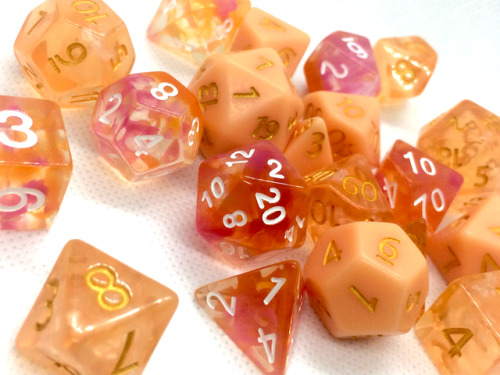
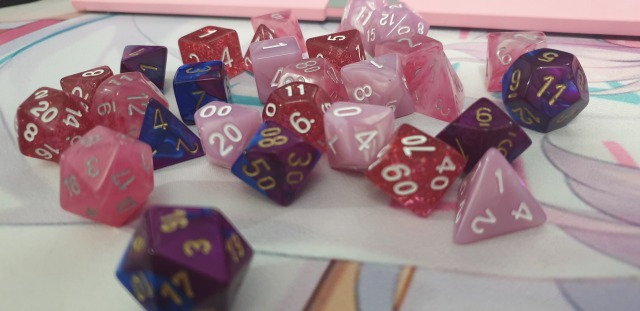
Dice- my friend took a picture of their dice for me

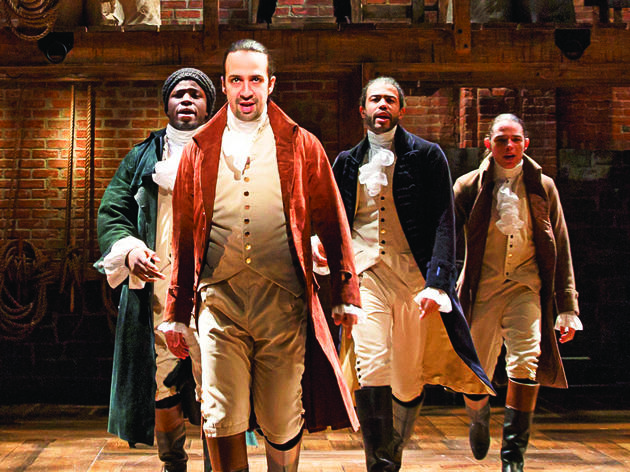
Blog #3, Interesting Uses of Rhetoric in Hamilton

Things are back in full swing in Dual Credit English now as the first paper of the new semester has been assigned! And it just so happens to be over Hamilton: An American Musical, my years of listening to the soundtrack non-stop are finally paying off. (and no, I will not be apologizing for however many Hamilton jokes I manage to fit into this blog post.) Despite my familiarity with the musical beforehand, I still had lots to learn about the way Hamilton used rhetoric as means to tell a story and reflect the cast of characters. Through reading the textbook, class discussions and taking the time to look deeper into the lyrics themselves, I find myself appreciating the musical even more than I did before and furthering my knowledge of rhetoric and how to find uses of it in works both fictional and not.

Hamilton is filled with tons of rhetoric, ranging from ethos to both logos and pathos and all of these different forms work to make for a well written story with layers upon layers of meaning. There are so many different forms and uses of rhetoric in the play that I could not discuss all of them, as I would miss some along the way. Personally, one of the most interesting ways Hamilton uses rhetoric differently for every song and character. Hamilton himself uses logos and ethos almost exclusively, almost never using pathos. But other characters such as Peggy or Maria only use pathos. I think this is interesting and says certain things to every character.

This week was pretty stressful for me, actually. I have been having a running problem with my party members that I play with weekly. Since basically the beginning of the sessions, I have been talked over and several people have undermined my authority over the game in areas such as spell uses, if rolls are successful or not, and general plot that I wrote myself, as the entire campaign is homebrewed. This problem has been growing and getting out of control, so I needed to consider how to get them to listen to me. Before I had been using various forms of pathos by stating that by my party members not listening I had been getting more and more stressed and annoyed and it was seriously affecting my DM-ing ability. I had also been attempting to use ethos by stating that I was the DM and therefore they needed to listen to me, as that position tends to carry more respect and responsibility in the world of DnD. Both of these tactics were not getting through to my party members, and with my newly found discovery of how effective logos can be if used correctly, I decided to see if logos would be as effective here as well. To back up my logic that the DM holds the final say in DnD, I referenced official books stating the basic rules for any DnD game, taking full quotes that supported my logic [this was also a use of ethos]. My argument using these strong logos and ethos forms of rhetoric was very successful, as my party as learned to listen to some extent. We will see how effective this argument was long term in the following weeks.

This week I want to stray away from musical analysis, as I have done that every single week thus far, which isn’t that many to be fair, but still I feel like it is time for something new. I actually want to discuss more on the topic of DnD, particularly my own campaign and the rhetoric I have unintentionally put within it. For reference, my campaign is about playing though a game made to determine which pantheon of Gods will be have domain over the universe until the next game takes place. The party’s job is to protect their God and kill the other opposing one by fighting him off, and thusly winning the game. Each party member also has a role they must play, one of them has been chosen as the Betrayer, someone who will deceive and then let down their entire party when they need them most, labelled as the villain of the game.

This statement, however, is wrong. The antagonist of the campaign is instead the one who created the game as a way to kill off her fellow Gods so she could reign supreme. But through presenting her as a God, more specifically one that is not evil in the eyes of the party, they would not and do not suspect her of having ulterior motives. This idea gives this Goddess credibility, or ethos, and therefore gives the game itself ethos as well given that she, the Goddess, is the creator. I have also played off a popular way to structure a logos argument shown below.

This Goddess is good and a God.

This game was created by this Goddess

Therefore, this game is good.

This shows plainly the logic I correctly assumed the party would use in determining if they should believe the game or not.

The party believes the Gods because of their powerful position and the ethos that this position comes with, so they do not suspect that this one Goddess in particular nor the game she has made. They do not suspect that both are actively lying to them and causing them to inadvertently bring about the end of free will in their world. I am also using the logos argument I laid out earlier.

Citations

“#Dndbeyond Tumblr Posts.” Tumbral.com, http://www.tumbral.com/tag/dndbeyond.

Hamilton: An American Musical. By Lin-Manuel Miranda, directed by Thomas Kail, 21 Apr. 2016, Richard Rodgers Theatre, New York, NY. Performance.

Miranda, Lin-Manuel. Hamilton: An American Musical. Performances by Lin-Manuel Miranda, Leslie Odom Jr., Phillipa Soo, and Jonathan Groff. Atlantic Records, 2015.

Blog #2 Ethos, Logos Pathos

Second week back and we have really gotten back into the swing of things in Dual Credit English, a week filled with lots of reading and the lyrical genius that is Lin Manuel Miranda (which I am definitely not complaining about). By putting both the textbook example and definitions of the three big forms of rhetoric and a musical filled with all sorts of rhetoric together, I think I am developing a strong grasp on what rhetoric is and how to apply it to daily life. The textbooks wording and examples led me to understand the different subcategories of each form of rhetoric, which is incredibly helpful not only in class, but within most real life situations as well. And then applying these new concepts to the musical itself really helped me solidify my understanding of rhetoric.

I had actually got myself into a bit of trouble with my father this week. To make a very long and complicated situation short, my phone is heavily monitored. My every location is watched, every text, every call and so on and so forth. So my parents don’t trust me at all, and never have, which is why I often get in trouble for things related to my phone even if they aren’t really justified. Essentially, the reason I was in trouble on that particular day was that the app had located me at a friends house during school at around 11:30 and my father wanted to know why. My goal of the conversation was to convince him that I did not go over there, which was the truth, but the app had more credibility to him than I did. I had to fight the apps ethos.

I actually remembered what I had read in the textbook early that day, about how having a strong logos argument can build up ethos to an extent. So, I used logic to my advantage, stating that there would be record of me leaving the school, several people would have stopped me before I even got out of the building, my friend in question cannot drive, most of my friends cant drive on that note, I know I have a tracker on my phone so why would I leave campus with it when I knew you would find out, etc etc. By building up all the logical reasons why I could not have left the school to go over there, I slowly built up my own ethos, as all my logical assumptions made sense. I also used the ethos of the teachers in my argument, as I was willing to ask them to email my father to confirm my whereabouts. In the end, my logos and ethos filled argument was successful against the apps ethos, and I got off with a stern lecture and not a full on assault of my character, which was a win in my book.

For my rhetorical analysis this week, I am once again using a musical, as I all I do is really listen to musicals and the one in particular is filled with tons of rhetoric. The musical depicted above is called ¨The Guy Who Didn’t Like Musicals¨ performed by Starkid Productions.

This musical is about a small town that is hit by a meteor, causing a zombie apocalypse of sorts due to alien possession. Expect, instead of turning into zombies, the victims of these possessions start to sing and dance as if they were in a musical. These monsters then use their host bodys memories to convince and manipulate the living to become one of them. Due to this, there is a ton of rhetoric. Nearly all the songs featuring a possessed monster includes them trying to spread their influence include some sort of rhetoric used. The song I’m using is the finale of the entire show, when the main character that was thought to have died comes back and is revealed to be a monster himself.

Throughout the song, he is trying to convince to the female lead to join him and the other monsters on stage. He does this by referring all the other songs in the play, but by doing this, he briefly uses all the rhetoric used in the entire musical. Paul says in the beginning of the number, ¨I’m still the man you trust¨ attempting to play off the ethos he has built with Emma throughout the entire musical. He then goes on to say ¨don’t you want to see me happy, is that so tragically wrong¨, now using slight logos but heavily leaning on the pathos argument, as him being happy is not bad thing, and if she thought this then she is the one in the wrong. Throughout the rest of the number, Paul constantly uses his strong romantic relationship with Emma against her. He mentions that this one of the happiest he has ever been, that he ¨found his calling, and you can too¨. By saying this, Paul is trying to sell the fact that this is a wonderful thing, and that if she joined him, she could have this happiness as well. The majority of the rhetoric used is pathos and ethos, and this play shows how moving these arguments can be.

Steves, Ashley. “Now Casting: Hit Broadway Musical ‘Hamilton’ Needs Talent 3 More Gigs.” Backstage, Backstage, 29 Aug. 2019, http://www.backstage.com/magazine/article/now-casting-broadway-musical-hamilton-68894/.

“Team Starkid (Ft. Corey Dorris, Jaime Lyn Beatty, Jeff Blim, Joey Richter, Jon Matteson, Lauren Lopez, Mariah Rose Faith & Robert Manion) – Inevitable.” Genius, 24 Dec. 2018, genius.com/Team-starkid-inevitable-lyrics.

Introduce Yourself (Example Post)

This is an example post, originally published as part of Blogging University. Enroll in one of our ten programs, and start your blog right.

You’re going to publish a post today. Don’t worry about how your blog looks. Don’t worry if you haven’t given it a name yet, or you’re feeling overwhelmed. Just click the “New Post” button, and tell us why you’re here.

Why do this?

  • Because it gives new readers context. What are you about? Why should they read your blog?
  • Because it will help you focus you own ideas about your blog and what you’d like to do with it.

The post can be short or long, a personal intro to your life or a bloggy mission statement, a manifesto for the future or a simple outline of your the types of things you hope to publish.

To help you get started, here are a few questions:

  • Why are you blogging publicly, rather than keeping a personal journal?
  • What topics do you think you’ll write about?
  • Who would you love to connect with via your blog?
  • If you blog successfully throughout the next year, what would you hope to have accomplished?

You’re not locked into any of this; one of the wonderful things about blogs is how they constantly evolve as we learn, grow, and interact with one another — but it’s good to know where and why you started, and articulating your goals may just give you a few other post ideas.

Can’t think how to get started? Just write the first thing that pops into your head. Anne Lamott, author of a book on writing we love, says that you need to give yourself permission to write a “crappy first draft”. Anne makes a great point — just start writing, and worry about editing it later.

When you’re ready to publish, give your post three to five tags that describe your blog’s focus — writing, photography, fiction, parenting, food, cars, movies, sports, whatever. These tags will help others who care about your topics find you in the Reader. Make sure one of the tags is “zerotohero,” so other new bloggers can find you, too.

Design a site like this with WordPress.com
Get started